We introduce Moray, a neural reconstruction framework for coherent inverse problems built on spectrally parameterized forward operators that bypass conventional time-domain synthesis and instead evaluate measurements directly through closed-form spectral kernels. This parameterization induces a substantially shorter and better-conditioned differentiable graph compared to time-domain approaches. We further introduce Phase-Coherent Manifold Parameterization, a scene representation that jointly learns scene reflectivity and a deformable surface manifold, allowing the reconstruction to adapt to geometric deviations from the assumed imaging plane. We instantiate these ideas for 77 GHz radar imaging using real measurements from a synthetic-aperture mmWave system. Across multiple challenging scenes, Moray consistently improves reconstruction fidelity, suppresses background artifacts, and degrades more gracefully under data limitations.
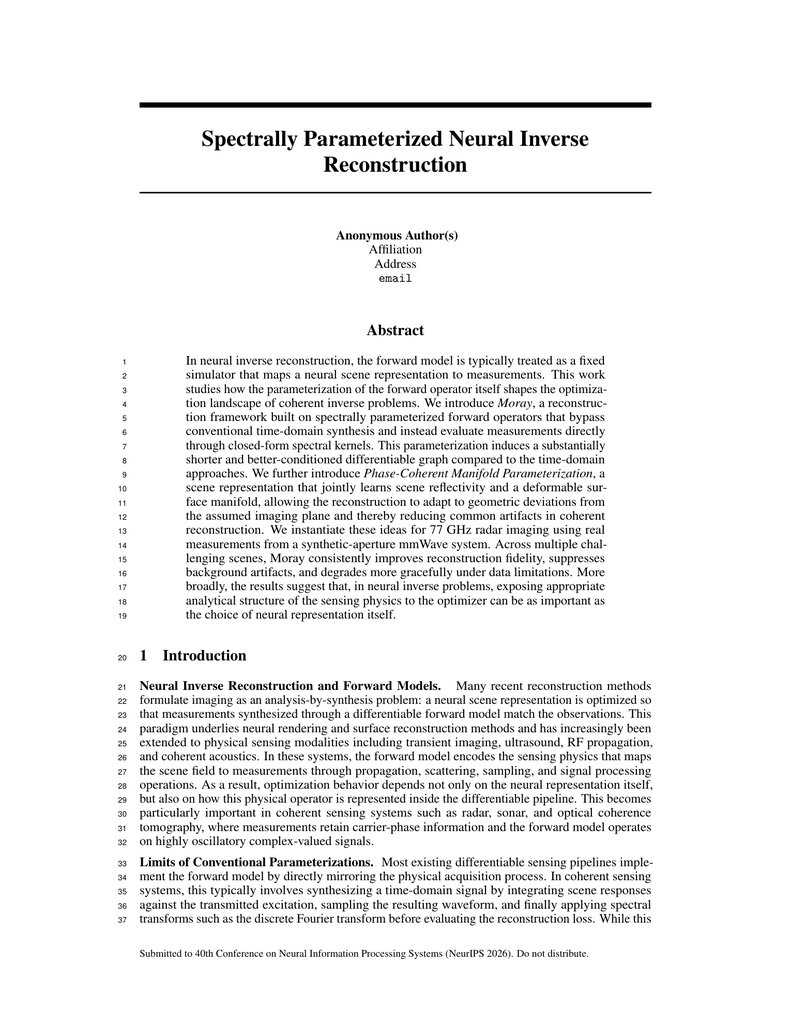
From raw acquisition to reconstruction.
A single 77 GHz FMCW radar rasters across a scan plane, building up a synthetic aperture one chirp at a time. Every TX position contributes a full range spectrum of the scene.
The chirp's round-trip time-of-flight encodes scene geometry as a beat signal. The range information naturally gets encoded in spectral domain.
Rather than fixing a flat imaging plane, PCMP learns a deformable surface manifold jointly with the reflectivity. The imaging geometry follows the object surface, eliminating the carrier- wavelength fringe artifacts.
A compact INR represents the scene and is optimized against the measured spectra through the closed-form forward model. Per-bin supervision yields a well-conditioned optimization landscape and produces sharp, fringe-free reconstructions.
We compare against two recent neural radar reconstruction methods — DART and Radar Fields — on real measurements from our 77 GHz FMCW testbed. Both baselines inherit their forward models from time-domain photometric pipelines and re-render the full beat signal at every optimizer step.
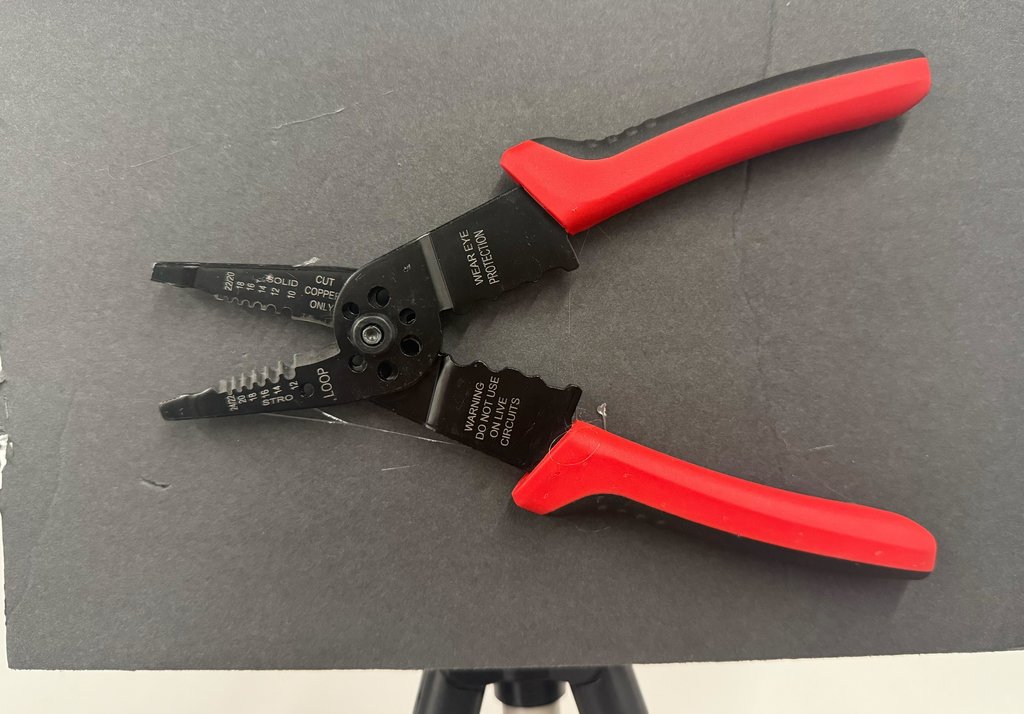
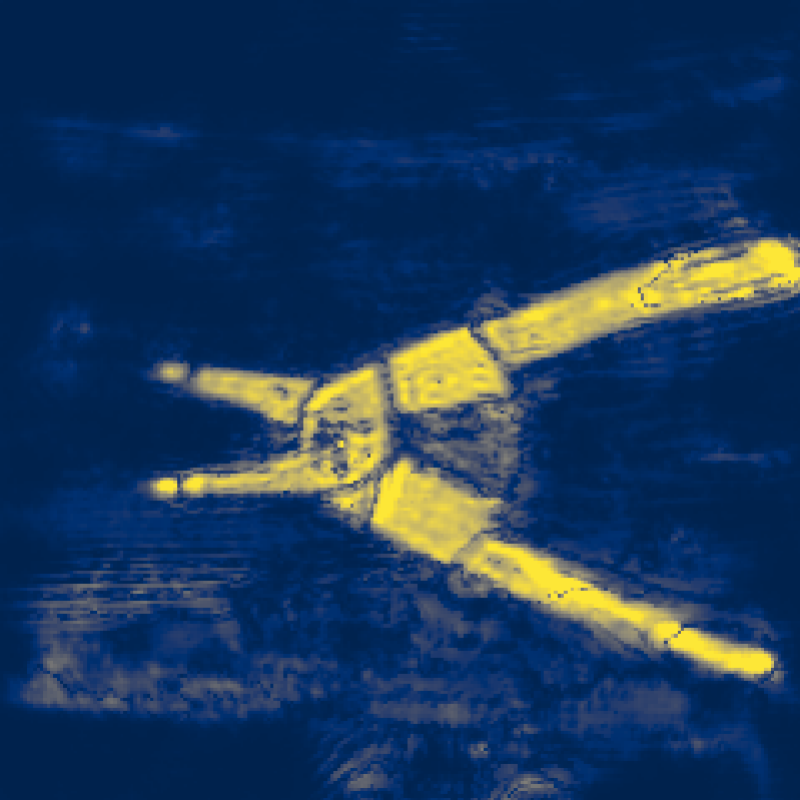
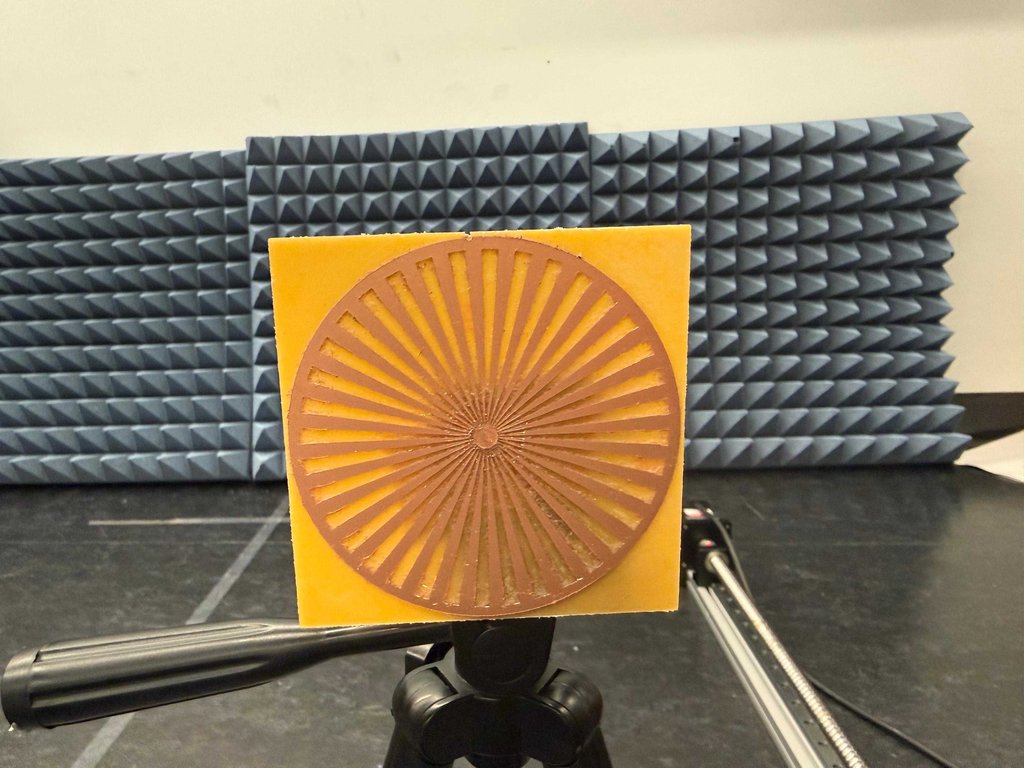
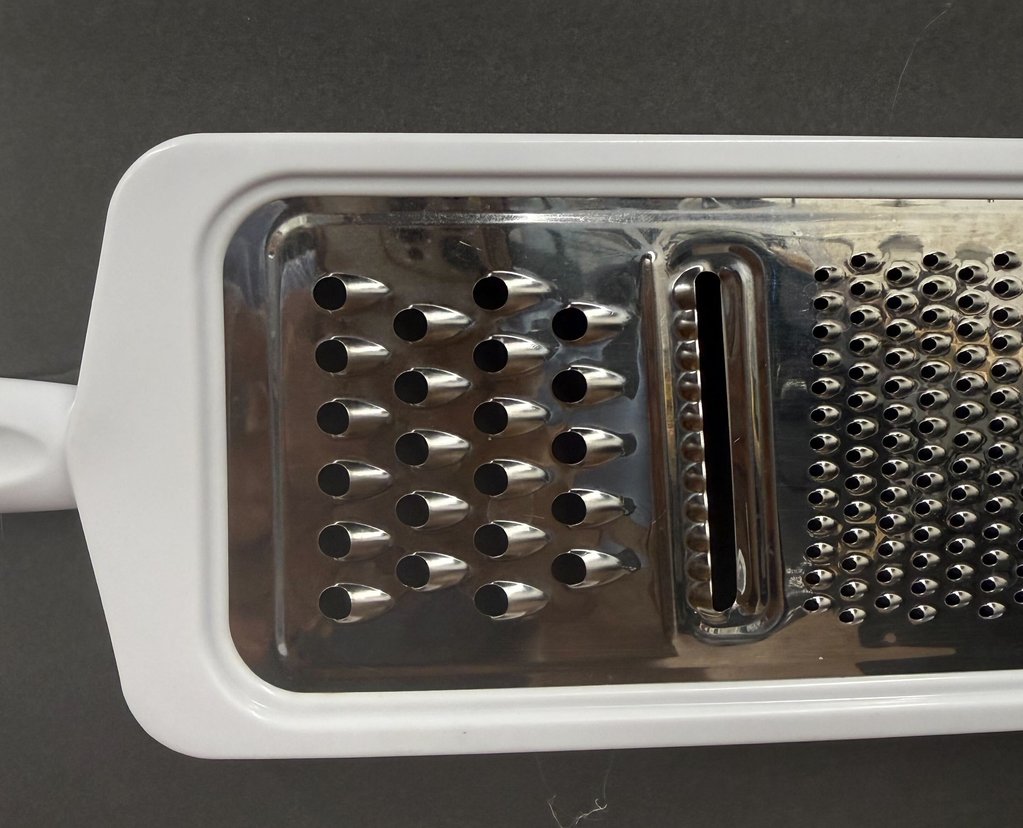
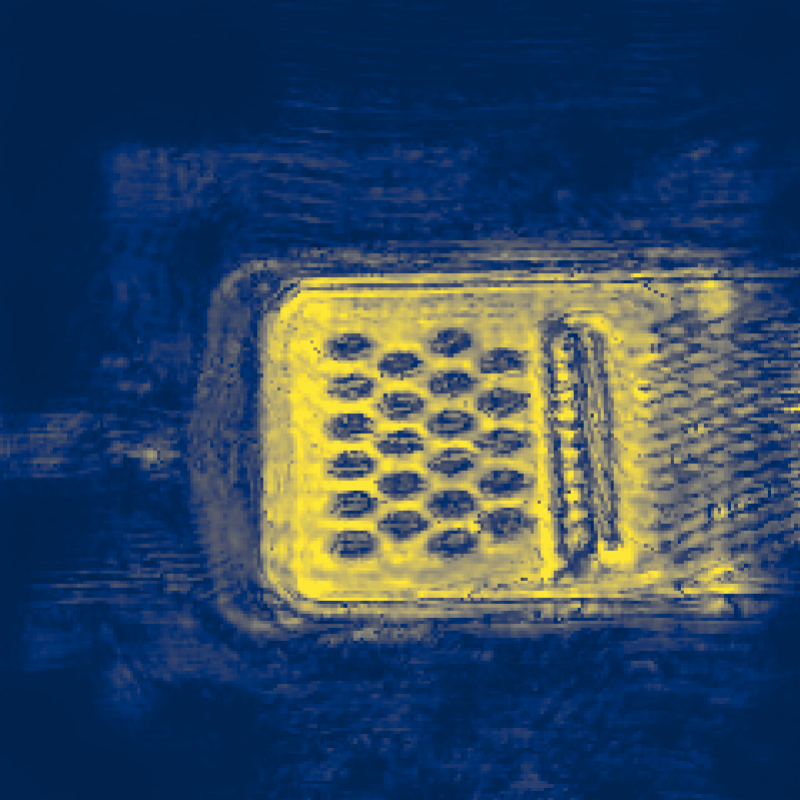
The three objects probe different reconstruction challenges: the articulated metal handles of the pliers, the fine radial structure of the Siemens star and the dense raster of cylindrical holes in the grater. Across all three, Moray recovers sharper edges and cleaner reconstructions.
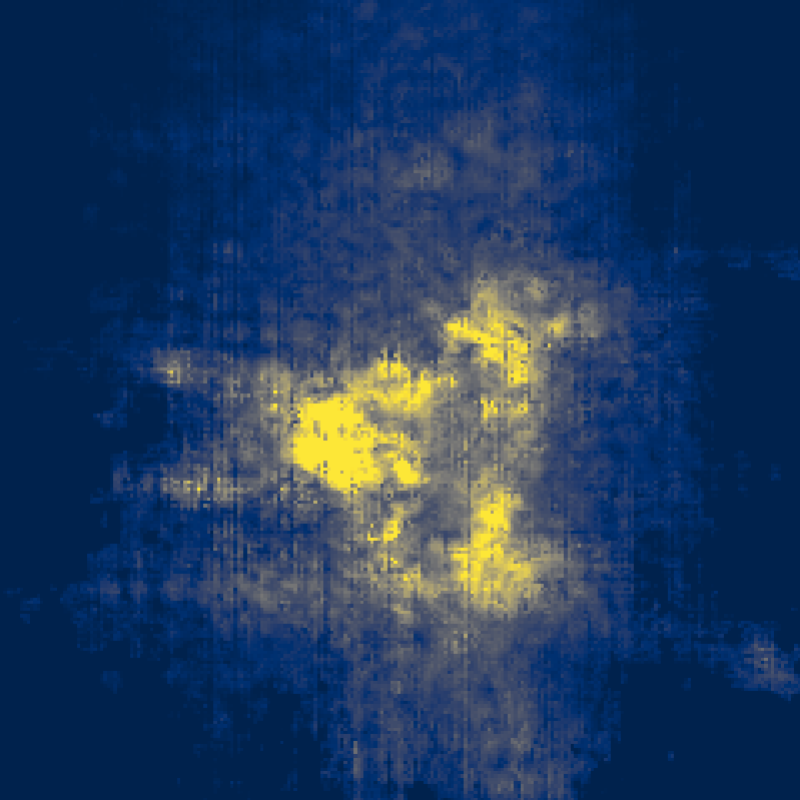
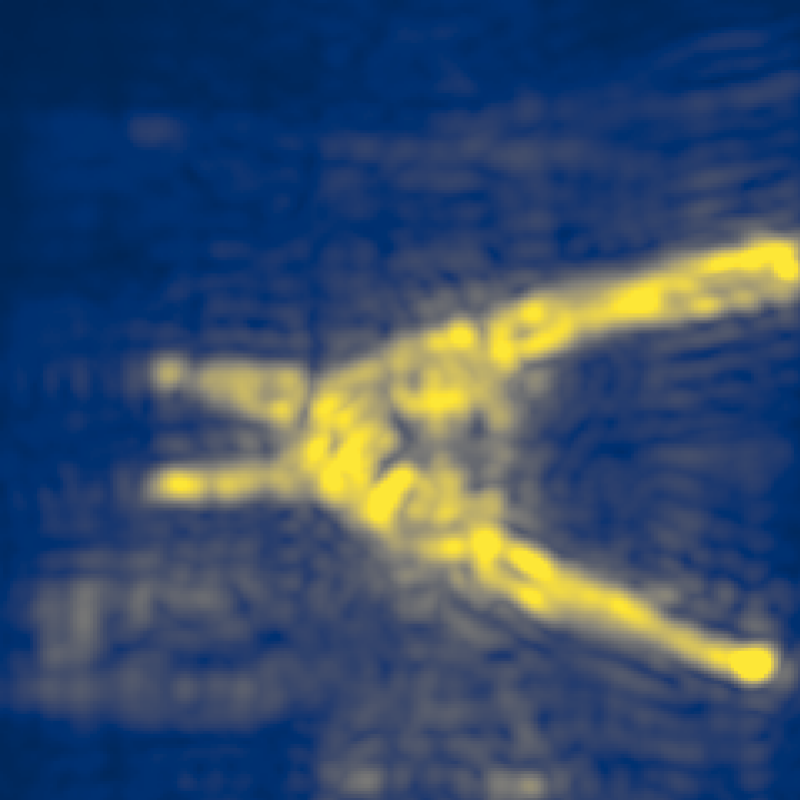
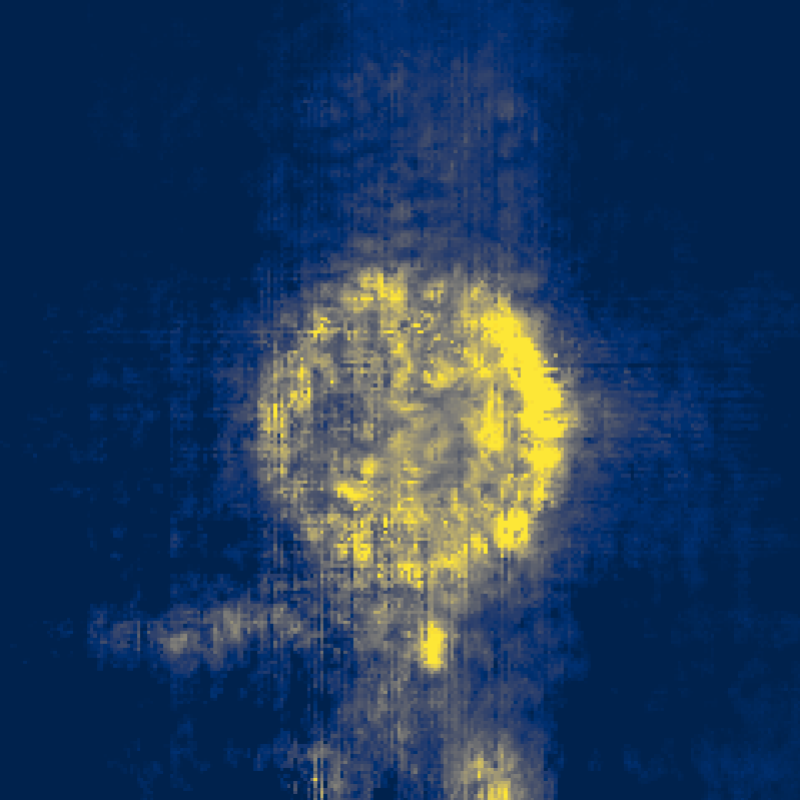
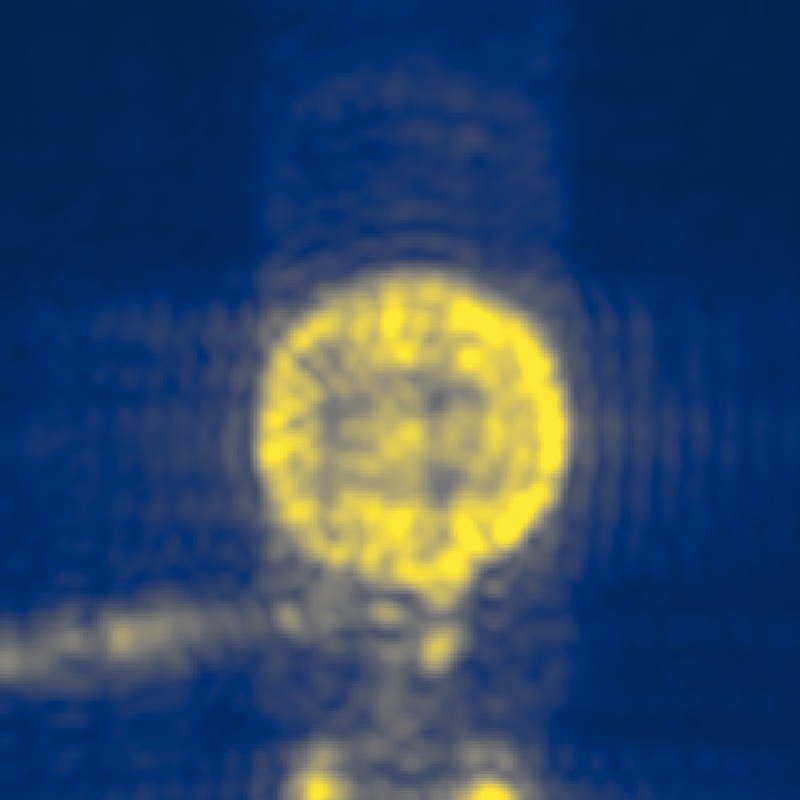
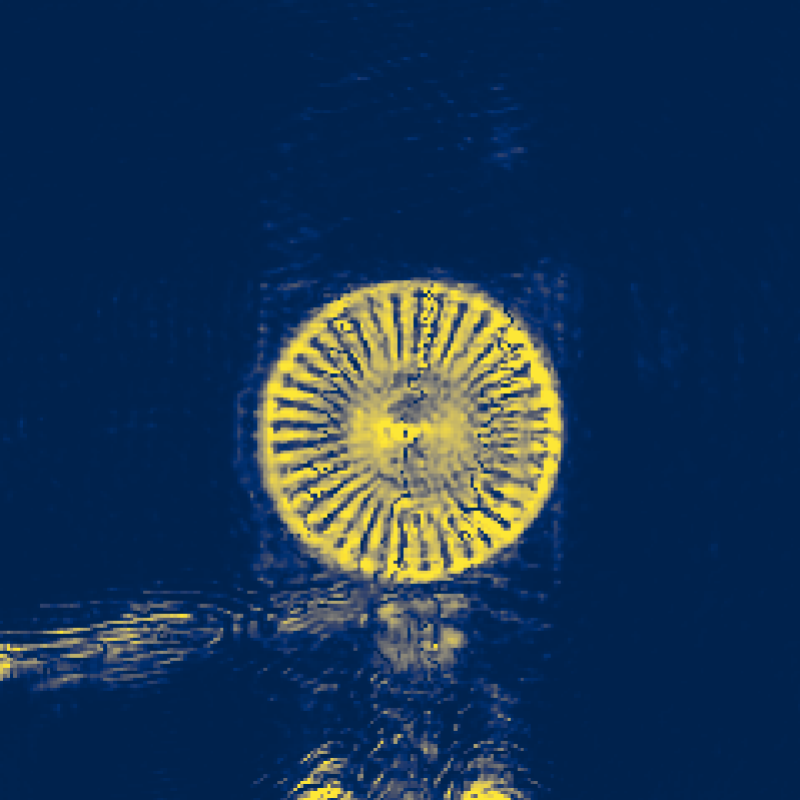
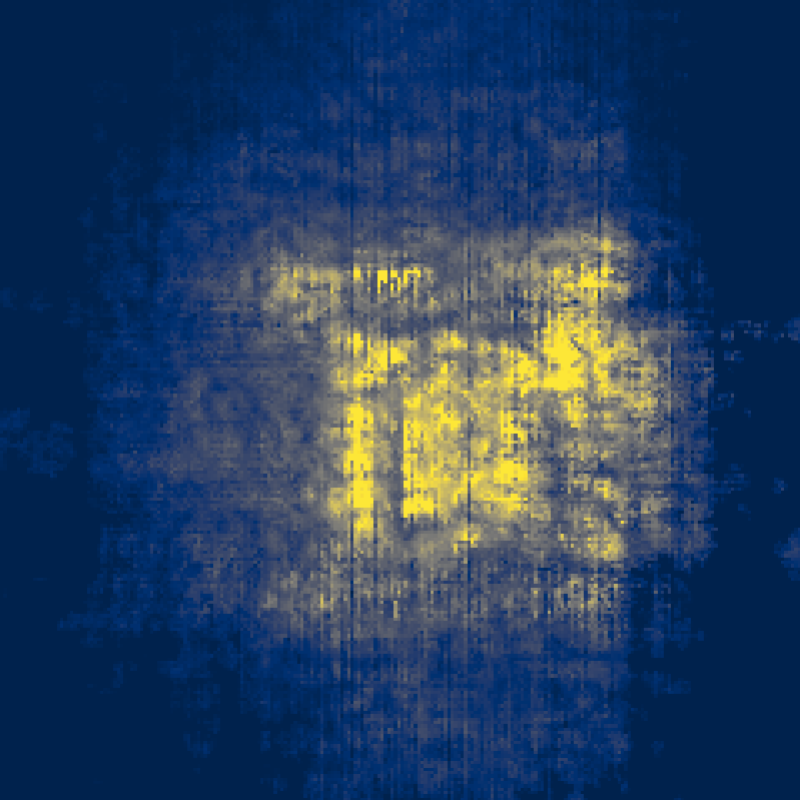
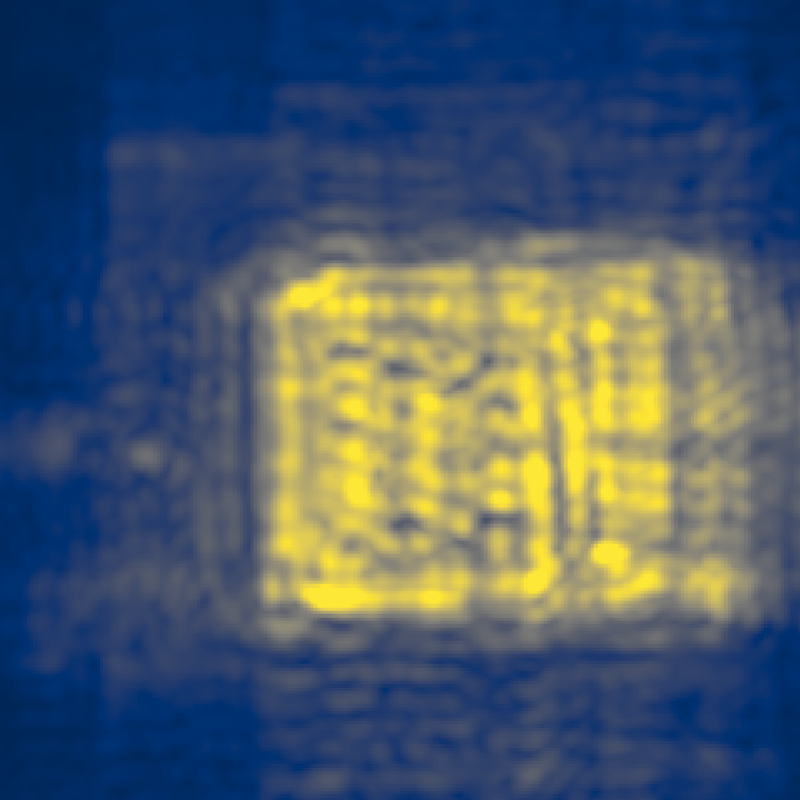
Under a coherent measurement, even sub-centimeter mismatch between the object surface and the assumed imaging plane wraps into a periodic phase pattern, which the optimizer faithfully reproduces as fringes set by the carrier wavelength (~3.9 mm at 77 GHz).
We resolve this with Phase-Coherent Manifold Parameterization: jointly learning the reflectivity and a deformable surface manifold so the reconstruction geometry adapts to where the scatterers actually live. Drag the handle to see the same scene reconstructed without PCMP and with PCMP.
Real synthetic-aperture systems rarely get the luxury of a fully sampled aperture: scanning is slow, hardware is expensive, and opportunistic measurements come with whatever transmit positions happen to be available.
We reduce the number of Tx in the aperture down to 50%, 25%, and 15% by random subsampling and reconstruct from the remaining positions. Backprojection creates ghost and aliasing artifacts. Moray degrades gracefully: edges stay sharp even under severe undersampling.
@inproceedings{moray2026,
  title     = {Moray: Spectrally Parameterized Neural Inverse Reconstruction},
  author    = {Takawale, Harshvardhan and Ghosh, Aritrik and Roy, Nirupam},
  booktitle = {Advances in Neural Information Processing Systems (NeurIPS)},
  year      = {2026}
}